

Morabeza: 11 Days in Cabo Verde
This archipelago in the Atlantic is in permanent contention for our favorite country on earth.
It takes a special place to get us off the bikes. Cabo Verde is that place. While this is not a scooting trip, there is more than enough adventure and discovery, from climbing the volcano on the island of Fogo to sampling the local caipirinhas. We will explore several islands, immersing ourselves in the local culture and natural beauty of this incredible volcanic island chain.
This Isn’t the Cabo Verde You’ve Been Sold
Cabo Verde is an archipelago of ten islands. Each one is distinct, and nine of them are inhabited. In the 1980s, the Cabo Verdean government began pushing Sal and Boa Vista as package-tour destinations. Think charter flights, beachfront resorts, the budget alternative to the Canaries. It worked. And for some, that’s all Cabo Verde is. But it’s so much more than that. If you’re coming for a brochure holiday, cocktails by the pool, predictable service and zero surprises, this tour probably isn’t for you. The islands we visit don’t fit the travel agency pitch.
Itinerary
Please see our philosophy on itineraries. Changes can be made depending on local conditions, spontaneous discoveries that can happen on the road, and the considerations of the group. Our Cabo Verde trip in particular is prone to itinerary changes. Don’t worry — it will all work out.
Day 1
On our first day in Praia, the capital of Cabo Verde and the largest city in the archipelago, we will head to the Ciudad Velha (the old city), hiking through a lush valley of palms, banana plantations and local rum distilleries to get there. After getting caught up on Cabo Verdean history, we will have lunch in Praia on the beach before a relaxing afternoon of leisurely wandering. At night, we will catch some live music, possibly some morna, Cabo Verde’s national brand of folk music.
Day 2
After our day in Praia we will head over to the island of Fogo, home to an active volcano and the highest peak in West Africa. This is where our itinerary can be a bit difficult to pin down. Depending on scheduling, we will either take a ferry or a short flight. Once on Fogo, we will explore São Filipe, the hilly capital city of basalt cobblestone streets and colorful colonial architecture.

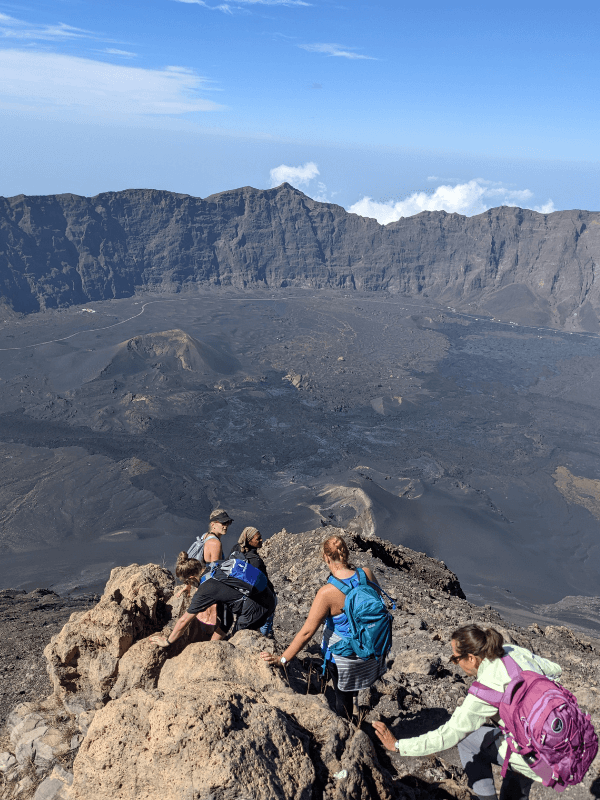
Climbing the Highest Point in West Africa
Day 3
We will head out of São Felipe and loop around the island, visiting Ponta da Salina and the Mirador dos Mosteiros as we gradually make our way to the center of the caldera. Along the way, we will track down some wild grown coffee beans and eat a delicious local meal for lunch. We will arrive at our lodging — a guesthouse made out of hardened lava from the volcano — in the afternoon, with time to relax before the following day’s hike.
Day 4
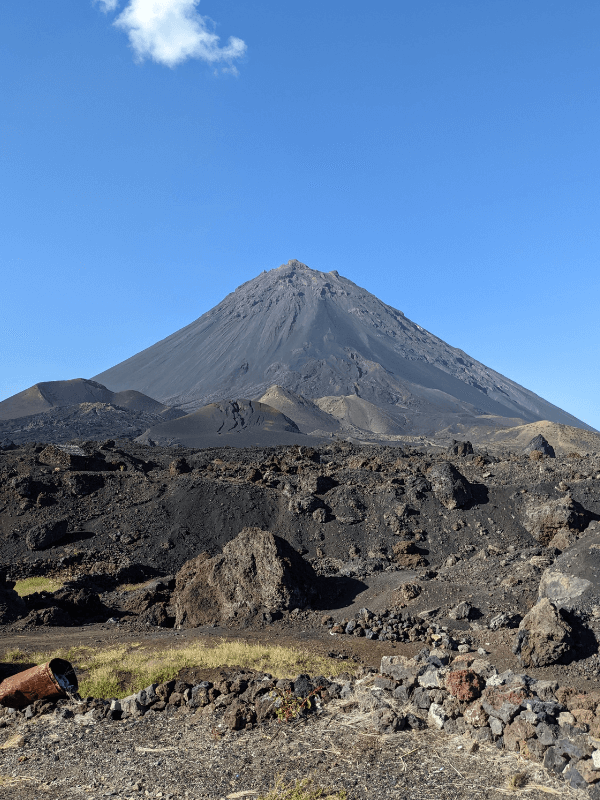
We have a big day in front of us. It will start before sunrise as we walk briskly across the caldera, making our way to the base of Pico de Fogo. As the sun begins to rise over the caldera, we will find ourselves in and out of clouds while a mind-bending scene begins to take shape all around us. With each step, we will get closer to the summit, with its dizzying view of the caldera and the deep blue ocean beyond, and the exhilarating sense of accomplishment that comes with a climb up West Africa’s highest peak. We typically reach the summit just before midday and arrive back at the lodge for a nourishing late afternoon lunch and perhaps a shot of grogue or two to celebrate the day’s accomplishments.
Hiking Pico de Fogo
Summiting Pico de Fogo is challenging to say the least. There are steep passages on both the ascent and descent, loose rock, and about one kilometer of vertical climb. It is invariably a highlight for those that venture to the summit, but it is not for everyone and it is certainly not a required activity. You can always relax in the lodge and drink the local wine grown from the island’s rich soil, or you can opt to climb Fogo’s smaller peak, which is much more manageable.
Spontaneous Moments
Whether we are scooting or trekking, we like to discover a place on its own terms — “following the sound of the drums.”
Finding a local streetside barbecue and joining in on an improvised jam session amongst residents of the neighborhood (Praia, Santiago).
Onward to São Vicente
Day 5
We will return to São Felipe, but this time we will stay down near the port at a locally run guesthouse, where we will catch some live music as the sun sets over the island of Brava just in front of us. During the day, you will have time to wander the streets of São Felipe (a great place to buy the locally produced coffee and wine!) or to continue relaxing after summiting the highest peak in West Africa.
Day 6
We will hop on the ferry back to Santiago, then fly north to São Vicente, arriving into Mindelo. It’s a lively city with cobblestone streets, colonial houses, a postcard-worthy waterfront, and a music scene that has produced some of the most recognisable sounds in West Africa. In the evening we will find some live music and see where the night takes us.
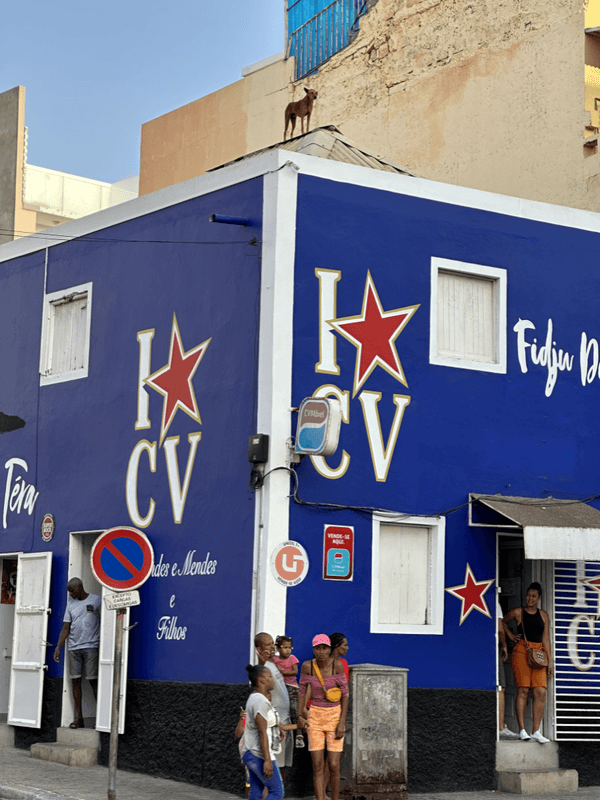
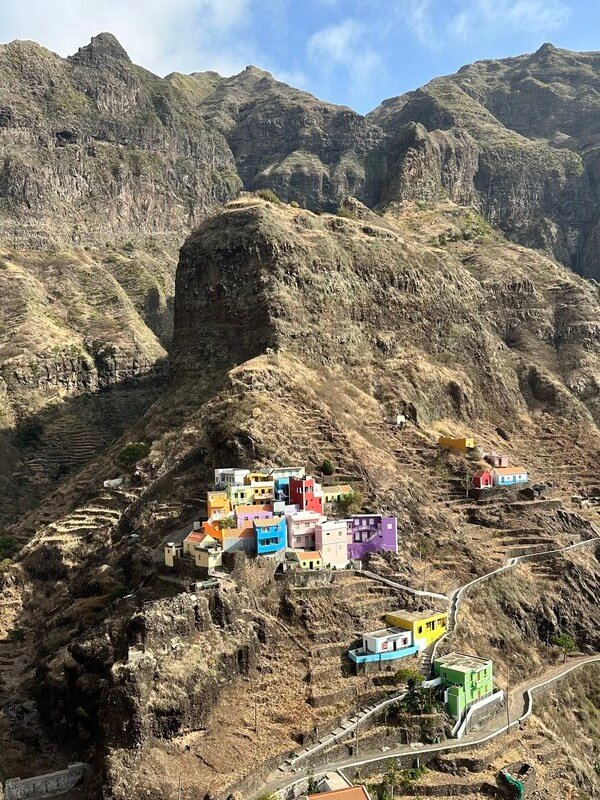
The Magic of Santo Antão
Day 7
We will take the morning ferry from Mindelo to Santo Antão, the second largest island in the archipelago and the western most point of Africa. After arriving at Porto Novo, we will head inland, crossing the island and taking in some of its best scenery along the way. We will visit the Cova crater, look out over the Paul valley from the ridge above, stop at a local grogue distillery, and spend some time on working farms before arriving at our overnight stop in Ponta do Sol.
Day 8
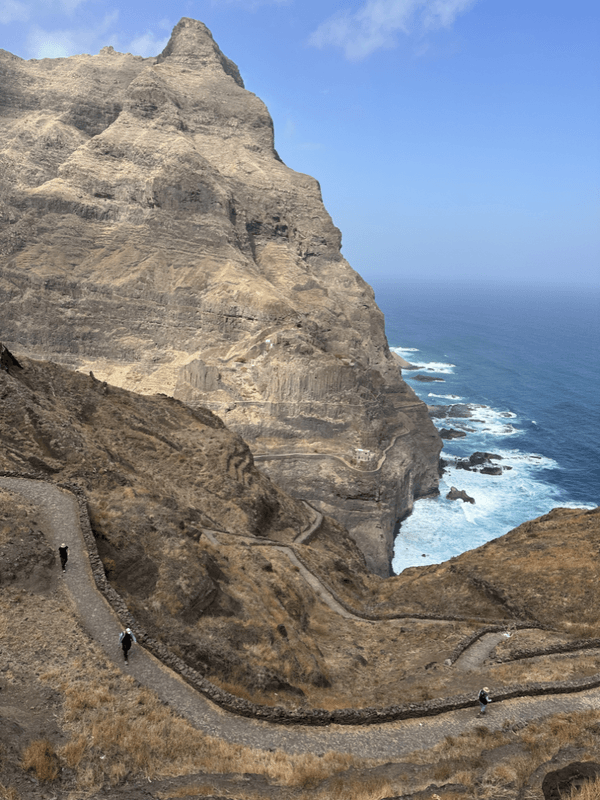
Today we will hike the Fountainhas trail, one of the best coastal walks in Cabo Verde. The twisting path runs along the cliff face above the Atlantic, passing through the village of Fontainhas, a cluster of colourful houses built into the rock. The scenery is dramatic to say the least, so much so that National Geographic once ranked it the “second most beautiful village view” in the world — a somewhat bizarre category of rankings but completely understandable when you are standing on the trail. Following our hike, we will return to our base in Ponta do Sol for a final night on Santo Antão.
To the beach we go
Day 9
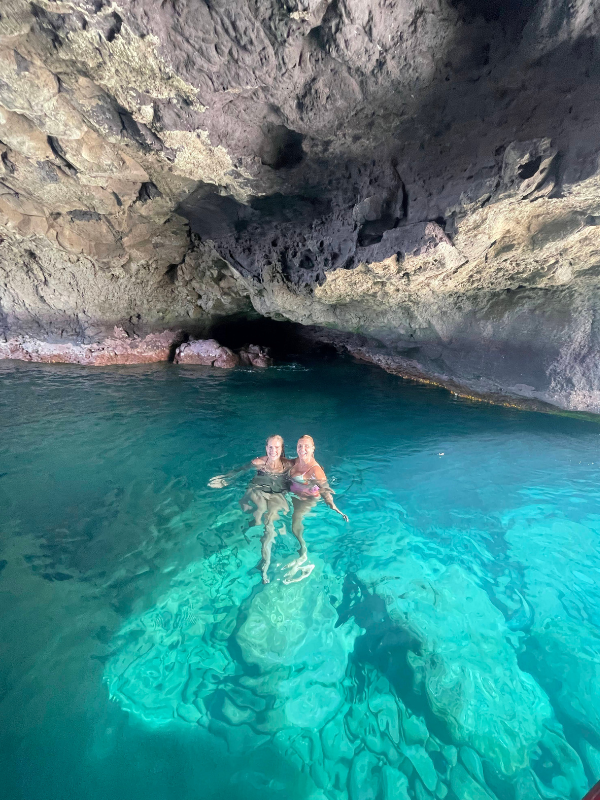
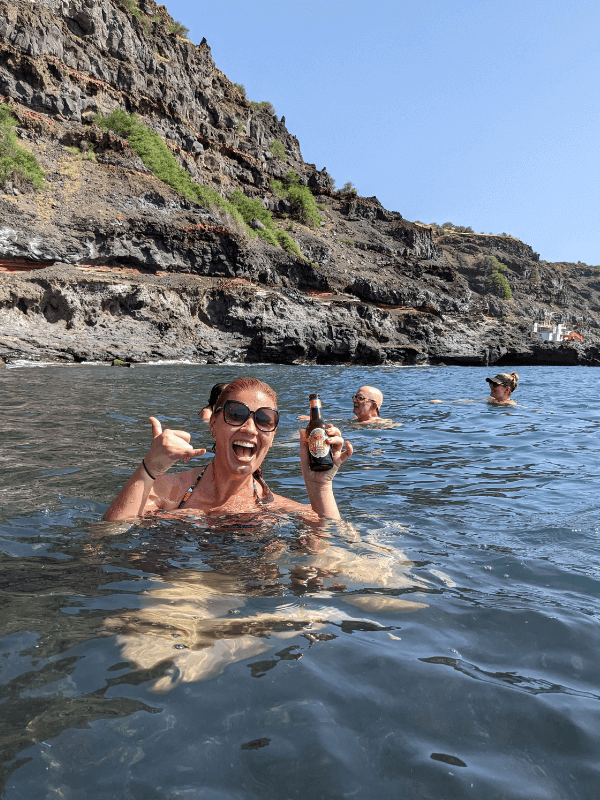
We will catch the first ferry to Mindelo, before flying back south to Santiago. Once we arrive, we will hit the road for our final destination of the trip — the wonderfully relaxed beach town of Tarrafal. Before we get to Tarrafal we will explore a few stops along the way. We will enjoy some home cooked Cape Verdean food, swim in a cave (or admire it from the boat — your choice), and go on one final hike in the magestic Serra Malagueta Natural Park. We will overnight in a local guesthouse, where we will have another home cooked meal before we continue on to Tarrafal the next day.
Day 10
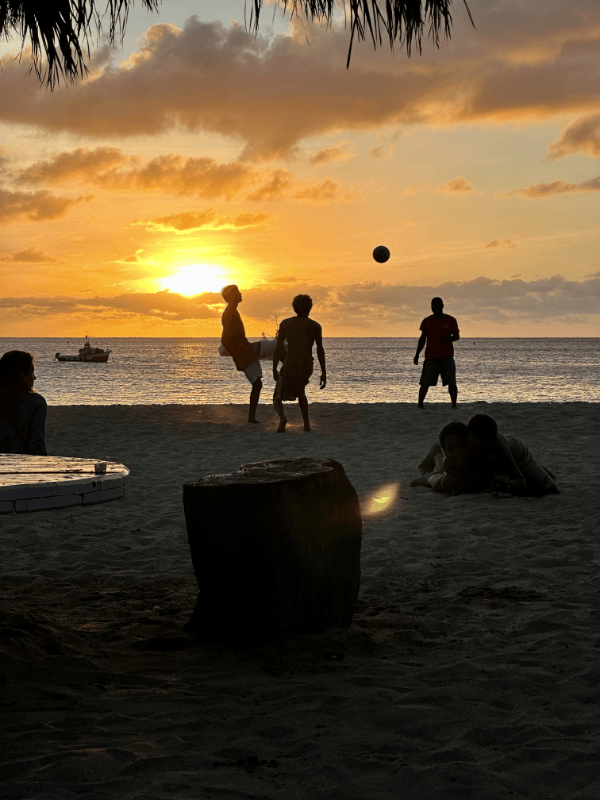
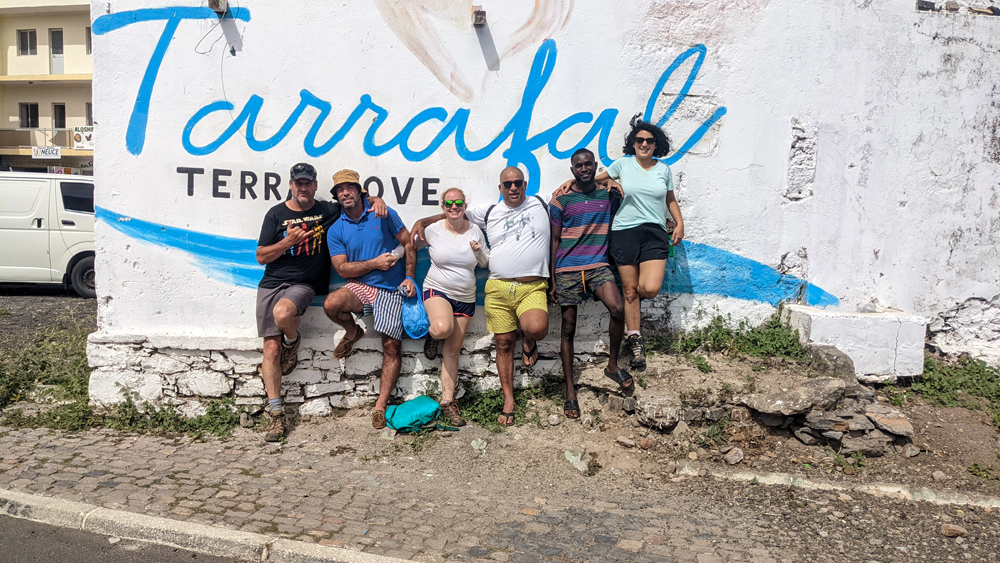
Tarrafal is one of those elusive beach towns that has a picturesque horseshoe bay, soft sand, a vibrant local community, and practically zero tourists. Most foreign holidaymakers opt for all-inclusive resorts elsewhere in Cabo Verde. Here, we will mostly share the beach with locals. There will be plenty of activities on offer, from snorkeling to surfing, but you may just want to relax on the beach with a good book.
Final Day
Day 11
After exploring Tarrafal and the northern corner of Santiago, we will head back to Praia, taking the coastal route and stopping at a few local spots along the way. Call it our farewell tour. By this time we will already be feeling the longing and nostalgia — saudade, if you want to use the Portuguese — for Cabo Verde. Time to plan the next trip over a few caipirinhas once we are back in Praia!
A note on flexibility
More than any other trip we run, this itinerary is subject to change. We are coordinating with some genuinely unpredictable travel providers, and if you need things to match what is written here, this is probably not the trip for you. Cabo Verde runs on its own schedule. We try our absolute best to get in tune with that.
What to Expect
The short version: there will be a few windy days, but you may consider relocating to Cabo Verde based on the weather alone. Expect lots of sun and daily highs of around 29°C (84 °F). The mornings and evenings can be cooler, however, and it’s best to bring some trousers and a sweater or jacket.
A hat, sunscreen and a bathing suit are all good ideas, along with a good pair of hiking boots. Once you have booked a spot on the trip, we can advise if there are any other recommended items depending on your individual needs.
The official language of Cape Verde is Portuguese, but the local Creole is more widely spoken. In this case, Creole is a mix of different West African languages, Portuguese and even some other European languages. English speakers are not difficult to find, though. Cape Verde has a large expat population, many of whom have migrated to English-speaking countries and since returned. We will also have different English speaking guides with us throughout the trip.
Wherever possible, we will stay at hotels and guesthouses that introduce us to the local community. We will always choose a family run place over a larger hotel. Generally, we will be staying in comfortable accommodation, with a rustic detour for a night when we are staying next to Pico de Fogo and some basic accommodation on Santo Antão. There are no bush camps on this trip and there is no need to bring a tent, sleeping bag, or linens, etc.
Let’s get this out of the way: if you are vegan or vegetarian this trip is certainly possible. You will not go hungry and you will still have a great time. But we have to admit that connaiseurs of pork and/or seafood are particularly spoiled in Cape Verde. From fresh grilled fish on Fogo to a pulled pork sandwich on the side of the road in the middle of the Santiago countryside, Cape Verdeans have figured out these two food groups. We will of course also sample Cape Verde’s national dish, Cachupa, a slow-cooked stew of corn, beans, cassava, sweet potato, fish or beef and sausage, and many other local specialties.
The trip price includes breakfast every day. The trip price does not include restaurant meals and drinks.
Praia is served by multiple international airlines, but your best bet is most likely TAP Portugal or Royal Air Maroc, depending on where you are coming from. Plan to arrive one day before the trip begins. You can plan your return flight for the evening of day 11. If you need to fly earlier in the day, we can help you organize a private taxi that could take you to Praia before the group departure.
A note about the itinerary, schedule and logistics in general: If you are expecting a by-the-minute schedule that will be respected to the letter, this is not the trip for you. While Cape Verde is more developed and organized than many of the other places we visit in West Africa, it is still a great place for honing your patience and learning how to improvise. Ferry schedules and other travel logistics can change without warning. It’s important to keep an open mind and be ready for anything. If you have the right attitude, you will learn to love the different challenges that may arise.
Available Dates
Morabeza: 11 Days in Cabo Verde
The trip cost includes all lodging, transportation, guidance, and breakfast every day.
Cost and Booking Information
The trip cost is €2150. This cost is based on double occupancy lodging. For a single room, there is an additional €150 supplement. To secure your spot on the trip, we take a non-refundable deposit of €300. If you are unable to make it on the trip, you can use this deposit towards a future trip at a later date.
As stated above, the trip cost includes all lodging, transport, and breakfasts during the trip. It does not include airfare, visas, optional activities, drinks, and restaurant meals.
If a trip has open spots, we will accept bookings up until departure. For trips that are full, we expect trip payment no later than two months before the trip starts. Please see our page on trip policies and cancellations.