
Every so often someone writes in asking if we can take them to see “real tribes” and go see a ceremony or something not touristy.
That phrase “real tribes” is a trope I’ve come to dislike intensely. It carries too much old baggage and it has never been the kind of travel I want to be part of. My short answer is still no. My longer answer is this story.
When I first started leading tours, the focus was still on giving clients “real” experiences. I will not deny that sometimes that meant arranging things and then pretending it was some organic moment we had stumbled into. I wanted them to feel like they had discovered something authentic, not staged. If we happened upon a ceremony or celebration, I saw it as a win. The more unplanned it seemed, the better. Something not to be denied is that it made me feel like a better trip leader, someone who really knew the place and could open doors that might otherwise stay closed.
But I was wrong about what that meant. Yes, stumbling across an authentic ceremony can be extraordinary. One of our mantras is: if you hear drums in the distance, find them. But expecting to just take part, even as spectators, without invitation or payment, that is where slowing down and thinking about what a genuine experience actually is has led me to step back and rethink some hard truths. Was I entitled to be there at all? Should we be blindly leading groups into these spaces? And what did our presence do to the event itself?
Ego played a part, and for me personally, I have replaced the part of me that chased the “authentic” with the part that is primarily interested in equitable exchanges. Equally important, I have learned to recognise and respect the decisions made by the performers and the community about what they share and how.
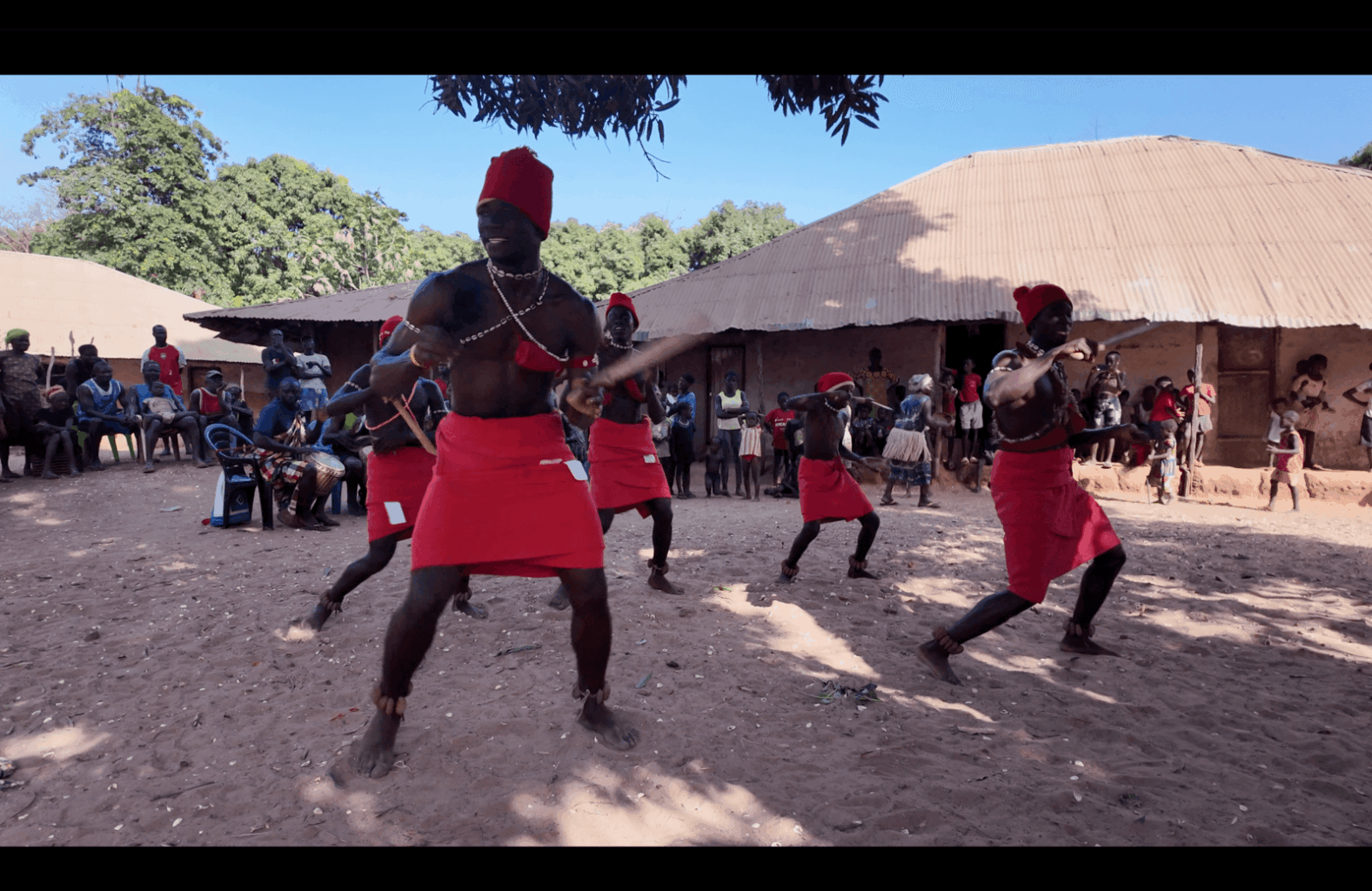
Earlier this year we were in the Bijagós Islands of Guinea-Bissau and we organised to see a local dance troupe perform in their own village. They had just been one of the standout cultural groups at the carnival in Bissau a few days earlier, and the village was alive with pride. Kids climbed trees for a better view. Animals wandered in and out. We sat front row, with chairs arranged so that we were right in the centre of the performance. Every arrangement had been set according to the troupe’s preferences and the village’s planning, and we followed their lead.
After the performance, things wrapped up quickly. Most people were amped that they had experienced it, and then we had a 45-minute walk back through the forest to the speedboat waiting on the beach. Along the way, one traveller said he felt like a bit of a voyeur. To him it felt strange that we sat there as if we were at a show.
I could see where he was coming from. Truth is, I clearly did not get the message across that the troupe and the village had organised and invited us, on their terms, and yes, we paid them fairly for the privilege. If I had, he might have watched it differently and enjoyed it more instead of wrestling with that unease.
Even when you do everything right, the unease can still creep in. And when it does, real life on the road is usually messier than any tidy principle you carry in your head.
On our first coast-to-coast expedition we had made it to Gabon and were staying in an eco camp next to a river when another group’s guide arranged a ceremony for his clients. He sold it as an “authentic” event they had stumbled across. His clients were not aware he was actually paying for it to happen and there was actually a hefty price tag attached. Our guide told me about it. He also invited us to it, but on a four-month trip our budget did not stretch that far.
I was stuck. Do I crash it and risk breaking their illusion? Ask my group to chip in and risk exposing the setup? Or step back and leave the chance that our guys will find out they missed something cool? None of the options sat right.
In the end, I kept quiet, and we stayed back. The next morning, one guy from the group heard about the “authentic” ceremony and was gutted to have missed it. When I later explained what had happened, that it was not organic, that it was a paid event, his viewpoint changed dramatically. It was suddenly less real to him.
And herein lies the dilemma. Why? This is the impossible question: if it was genuinely organic, would you even be allowed to be there as some random tourist?
The other guide’s “authentic” narrative effectively made transparency impossible without undermining someone else’s experience.
Often on the road we have come across cultural groups fully dressed up walking to the next village to perform at a ceremony, or even a funeral. And yes, they had been invited to carry out a cultural duty. Sometimes they are being paid to do it. This is not just some free thing that pops up all over the continent. Crucially, it is the performers and the community who decide who participates and what the audience sees.
It is days like this that helped change how I see what we are actually asking for when we expect culture for free. These performances take time, skill, and practice. The drummers rehearse. The dancers train. Costumes have to be made. And people have families to feed. Why should I expect all that for free?
When we paid in Bijagós, it was not just for us. The whole village turned up. Half of them were watching the dancers. The other half were watching us. We became part of the show.
And that mutual watching changes everything. In the old “authentic” model of tourism the power flowed one way. You observed, photographed, collected the experience and left. But when you’re also being watched, actively, openly, with the same curiosity you’re bringing, you can’t pretend you’re invisible. You become conscious of yourself as part of what’s happening. The kids in the trees aren’t just watching the dancers; they’re watching you watch the dancers. You’re performing too, whether you realise it or not.
At times it does feel a bit strange being treated like VIPs. Nobody likes feeling like the sideshow. But I suppose why not? Travel is not one-way. Sometimes you are the audience. Sometimes you are the thing being looked at. And this all happens on the performers’ terms, not ours.
That reciprocity, that mutual watching, is what makes it feel less extractive. When culture is supposed to be “authentic” and free, the implicit promise is that your presence doesn’t matter. But that’s a lie. Your presence always matters. You change the room just by being in it. Payment doesn’t create that dynamic; it acknowledges it.
The watching back also protects something crucial: their right to judge us. To decide whether they want us back. In the old model of “authentic” travel, that evaluative power only went one way. We got to decide if the experience was real enough. They were just… there. But when they’re watching us as deliberately as we’re watching them, they get to decide too. Were we respectful? Are we the kind of visitors they want to host again?
Though the setting could not be more different, in some ways it is a little like going to see a show in London. Not because the two places are the same (they’re not), but because it gives Western readers a familiar frame for something that is, in truth, far richer and more nuanced. In London, you might arrive on the Tube, buy a ticket, and follow instructions to your seat. In Bissau, you step off a speedboat and hike through the forest to reach a sandy square. The point is not to equate the two, but to show that in both cases you are paying to witness a performance by skilled artists.
The key difference is who holds the power. In London the system is fixed and impersonal. Here it is the troupe and the village who define the performance: where it happens, who sees it, how the audience is arranged. We follow their rules, and our payment is on their terms. It is not a transaction to satisfy our curiosity, it is a contribution to their art and their livelihoods.
Even the way we are positioned reflects this respect. Chairs are set up so we can watch, but the troupe decides the choreography, the flow, and when the show begins and ends. We become part of what they orchestrate, not directors of it. That is the privilege, and the responsibility, of being invited.
As anywhere else, the money circulates. It keeps the troupe going, puts food on tables, and helps the village put on the next show. It rewards people for sharing a part of their lives.
We are not one-time passers-through either. We come back. Over the years, familiarity builds on both sides. They recognise us, we better understand the boundaries. It becomes less about strangers doing business and more about people who know each other. People who have seen each other.
More than that, it protects the line between what outsiders get to see and what remains sacred. Some ceremonies are not meant for outsiders, and that is the way it should be. I do not need the full picture. What I am shown is the version they want me to see. A glimpse. And a glimpse is enough.
That is the real win of paying up front. It draws the boundary sharp. What I have seen on the ground in the Bijagós (and yes, the reports back it up) is that curated shows keep the cash flowing to troupes and villages without tourists ever getting near the closed rites, the initiations in the forest that stay for locals only. No spillover. Just support for what they choose to share, on their turf.
Looking back, I see how much my old way of thinking put me and our groups at the centre instead of the people actually sharing their culture. Expecting “authentic” culture to just unfold in front of us for free was about me, not them. Paying feels like the fairer choice. It leaves the sacred where it belongs and supports the people who are willing to open a window.
I know not everyone will feel the same. Some travellers still carry that unease. But for me, the shift is clear.
Paying does not cheapen culture. It shows respect.
It says: your time, your skill, your art, your beliefs, they matter.
Travel keeps challenging the easy answers I once relied on. I used to think handing over money made a performance fake. Now I see it for what it is: a fair exchange. They get something real, and I get a reminder that none of this is mine by right. It is a privilege to even be there.
Recognising it as a privilege is what makes paying, in some cases, feel right. For us it drives home the difference between showing up with cameras expecting a show and arriving as invited guests who understand we are being trusted with something valuable.
0 Comments